
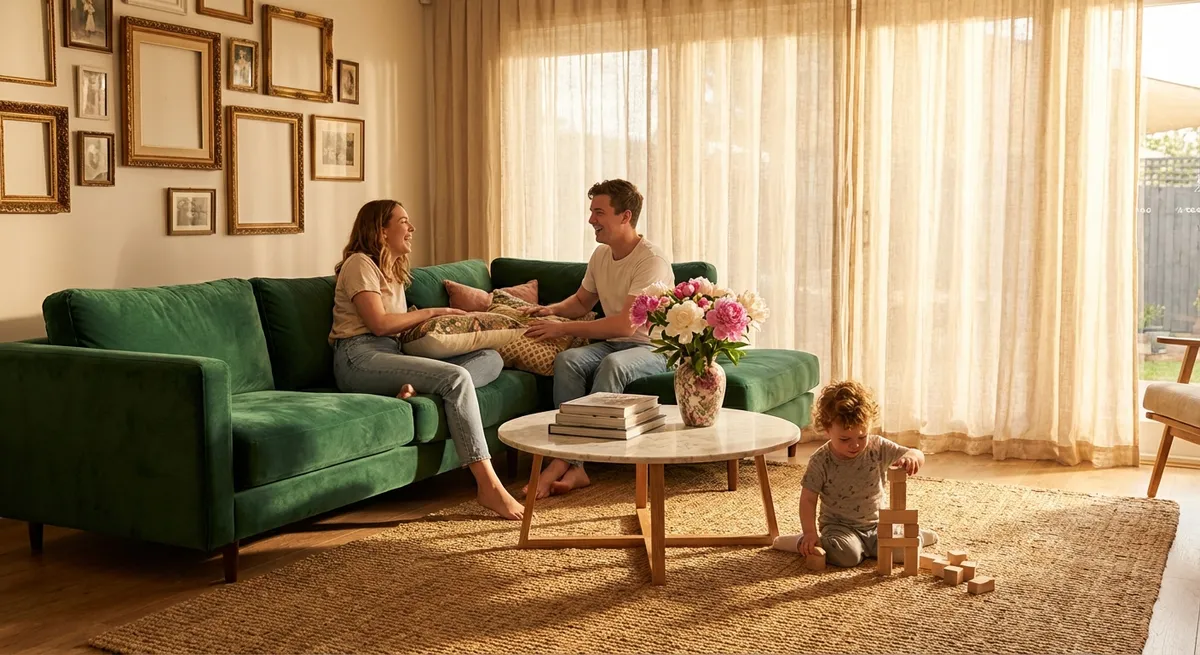
A living room is more than four walls and a sofa—it’s the heart of your home, the place where you unwind, connect, and create lasting memories. With a few thoughtful choices, even the most ordinary space can feel inviting, refined, and uniquely yours. You don’t need a designer’s budget or background, just a clear vision, a little patience, and a willingness to experiment.
This guide walks you through practical styling tips, budget-friendly upgrades, and inspiring before-and-after ideas to help you transform your living room into a space that truly feels like home.
Start with a Vision: Define How You Want to Feel
Before you buy a single pillow or paint swatch, pause and imagine how you want your living room to feel. Calm and airy? Cozy and cocoon-like? Energetic and social?
Take a moment to jot down three words that describe your ideal atmosphere—perhaps “light,” “warm,” and “welcoming.” These words become your compass for every decision you make, from color to furniture layout.
Next, assess what’s working and what isn’t. Maybe you love your natural light but dislike the clutter. Perhaps the sofa is comfortable, but the room feels flat and undefined. Identifying both strengths and pain points helps you invest your time and money where it truly matters.
Collect a small moodboard—screenshots, magazine clippings, or a Pinterest board. Look for patterns: Are you drawn to earthy tones, clean lines, layered textiles, or bold art? Let these patterns guide your choices rather than copying one space exactly. Your living room should feel like a reflection of you, not a showroom.
The Power of Layout: Make the Room Work for You
A beautiful room starts with a functional layout. Even the most stylish furniture can feel awkward if the flow is off.
Begin by choosing a focal point. It might be a fireplace, a large window, a statement piece of art, or even a well-styled media console. Arrange your seating so that it naturally orients toward this focal point, while still allowing for easy conversation.
A few layout principles to keep in mind:
- Float furniture when possible. Pull sofas and chairs slightly away from the walls to create a more intimate, designer-like feel.
- Create conversation zones. Arrange seating so people can speak comfortably without raising their voices—usually within 6–8 feet of one another.
- Mind the pathways. Leave at least 30–36 inches for walkways so the room feels open rather than cramped.
- Use rugs to define areas. An appropriately sized rug anchors the main seating area and visually pulls the room together.
Even small changes—angling a chair, shifting a side table, or rotating the sofa—can transform how the room functions and feels.
Color, Light, and Texture: The Elegant Trio
Color, light, and texture are the quiet forces that shape the soul of your living room.
Choosing a Color Palette
Start with a simple, cohesive palette: 2–3 main colors plus 1–2 accent tones. Neutrals like soft white, warm beige, or gentle gray create a timeless canvas. Then layer in depth with richer hues—a deep olive cushion, a rust-colored throw, or midnight-blue artwork.
For a serene space, choose analogous colors (neighbors on the color wheel, such as blue and green). For energy and contrast, pair complementary colors (like blue and orange) in small, controlled doses.
Lighting in Layers
One overhead light is rarely enough. Aim for three layers of light:
- Ambient lighting (ceiling fixture, flush mount, or a soft-glow floor lamp) to illuminate the room.
- Task lighting (reading lamps by the sofa or armchair, a lamp on a console) where you work, read, or relax.
- Accent lighting (picture lights, candles, string lights, or small table lamps) to highlight art, plants, or architectural details.
Warm white bulbs (around 2700K–3000K) create a cozy, inviting glow that flatters most living rooms.
Texture for Warmth and Interest
Texture is what prevents a neutral room from feeling bland. Layer different materials:
- Soft: linen, cotton, velvet, wool
- Structured: wood, metal, stone, rattan
- Organic: jute rugs, woven baskets, ceramic vases
Mixing smooth and rough, matte and glossy, yields a quietly luxurious effect—even on a modest budget.
Budget-Friendly Upgrades That Make a Big Impact
You don’t need a full remodel to change the mood of your living room. Focus on a few high-impact, affordable updates.
1. Paint (or Paint Just One Wall)
A fresh coat of paint is one of the most transformative, cost-effective changes you can make. If you’re not ready for a full repaint, consider:
- An accent wall behind the sofa
- Painting just the trim or doors for subtle contrast
- Using soft, warm tones that complement your existing furniture
2. Swap Out Soft Furnishings
Textiles are the wardrobe of your living room:
- Replace mismatched or tired throw pillows with a curated set in your palette.
- Add a throw blanket in a contrasting texture (e.g., chunky knit, lightweight linen).
- Layer a smaller, textured rug over a larger basic one for depth and interest.
Look for pillow covers rather than whole pillows to save money and storage space.
3. Refresh the Coffee Table and Surfaces
Treat your coffee table like a mini stage:
- Use the “triangle rule”: stack of books + decorative object (like a bowl or sculpture) + organic element (like a plant or flowers).
- Vary heights and shapes—mix something tall, something flat, something round.
- Leave negative space so surfaces feel intentional, not cluttered.
The same approach works on consoles, side tables, and media units.
4. Upgrade Hardware and Small Details
Tiny changes can feel surprisingly luxe:
- Swap dated curtain rods for simple black, brass, or wood versions.
- Replace basic cabinet knobs on media units or built-ins with more refined hardware.
- Add simple, tailored curtain panels hung high and wide to visually enlarge your windows.
Styling Tips for a Polished Yet Lived-In Look
A beautifully styled living room feels both intentional and relaxed—like it’s ready for guests, but also for a cozy Sunday afternoon nap.
Here are practical styling habits that elevate your space:
- Style in odd numbers. Group accessories in threes or fives for a more natural, pleasing look.
- Vary heights and proportions. Combine tall lamps with low bowls, large art with smaller frames, substantial furniture with lighter side pieces.
- Edit regularly. Let a few pieces shine rather than displaying everything at once. Rotate decor seasonally instead of crowding every surface.
- Incorporate something personal. A framed handwritten note, a travel memento, or a cherished heirloom instantly adds soul and story.
- Include greenery. Even one well-placed plant or a weekly bunch of inexpensive supermarket flowers brings life and color.
Aim for “gathered over time” rather than “overly perfect.” The slight asymmetry, the favorite book left on the table, the throw draped rather than folded—these details make a room feel genuinely lived in.
Before-and-After Transformations (You Can Actually Do)
You don’t need dramatic construction to create a satisfying before-and-after. Here are three realistic transformation scenarios you can adapt to your own home.
1. The Dark and Cluttered Living Room
Before: A small space with heavy, dark curtains, a bulky sectional pushed against the wall, mismatched decor, and limited lighting. The room feels cramped and cave-like.
After (Weekend Makeover):
- Replace dark curtains with light, airy panels hung closer to the ceiling and wider than the window frame.
- Pull the sectional a few inches away from the wall and angle a chair to create an inviting conversation nook.
- Add a large neutral area rug to define the seating area.
- Remove excess decor and keep only a few cherished objects and a plant.
- Introduce two additional lamps for soft, layered lighting.
Result: The same furniture feels fresh and intentional. Light flows more freely, the space feels organized and calm, and the room invites you to linger.
2. The “Builder Basic” Blank Canvas
Before: White walls, beige carpet, a standard sofa and media console, and nothing on the walls. The room is functional but soulless, like a waiting room.
After (Gradual, Budget-Friendly Refresh):
- Choose a warm, cohesive palette (for example: sand, cream, charcoal, and soft blue).
- Add a gallery wall above the sofa mixing framed prints, personal photos, and maybe one statement piece.
- Introduce a textured rug and a few pillows in your chosen colors.
- Style the media console with books, a tray, a plant, and a couple of favorite objects.
- Add a floor lamp beside the sofa and a soft table lamp on a side table.
Result: Without changing the major pieces, the room now has personality, warmth, and a sense of story.
3. The Overgrown Toy or Work Zone
Before: Toys, remote controls, mail, and work items spread across every surface. The living room feels like a storage unit, and relaxing there is difficult.
After (Function-First Redesign):
- Identify zones: a play corner, a reading spot, and a main gathering area.
- Use attractive baskets and lidded boxes for toys and office supplies—easy to access, easy to hide.
- Add a slim console table behind the sofa or near the entrance as a designated drop zone for keys, bags, and mail.
- Limit visible toys and work items to a small rotation; store the rest.
- Choose one surface (like the coffee table) to keep styled and mostly clutter-free.
Result: The room still serves your real life, but now it also serves as a restorative, welcoming space for you and your guests.
Designing for Real Life: Comfort Meets Beauty
An elegant living room does not require perfection. Cereal bowls will appear, blankets will tangle, and cushions will lose their shape after a movie night. Beauty and comfort can coexist when you design with your actual lifestyle in mind.
Choose durable fabrics, washable covers, and finishes that can handle daily use. Opt for coffee tables without sharp corners if you have small children, and select rugs that can hide a little wear. Build in practical storage so that a five-minute tidy-up is enough to reset the room.
Most importantly, give yourself permission to evolve your space slowly. The most soulful living rooms are not completed in a day; they are curated over time, one thoughtful choice at a time.
Conclusion
Your living room is the quiet stage on which everyday life unfolds—conversations, celebrations, quiet afternoons, and late-night reflections. With a clear vision, mindful styling, and budget-friendly tweaks, you can transform it into a space that feels both elevated and deeply personal.
Start small: rearrange your layout, add a new lamp, or refresh your pillows. Notice how each change shifts the mood. As you layer color, light, texture, and meaningful objects, your living room will begin to mirror the life you’re creating within it—warm, welcoming, and beautifully your own.
Sources
- The Spruce – Living Room Ideas - Practical decorating ideas and examples for different living room styles and sizes
- House Beautiful – Living Room Decorating Ideas - Inspiration and expert tips on layouts, color, and styling for living rooms
- Better Homes & Gardens – Lighting Basics - Explains ambient, task, and accent lighting and how to layer them effectively
- HGTV – Budget-Friendly Living Room Updates - Real-world, low-cost upgrades that make a noticeable difference
- IKEA – How to Plan Your Living Room - Guidance on layout, zoning, and storage solutions for practical, everyday living rooms