
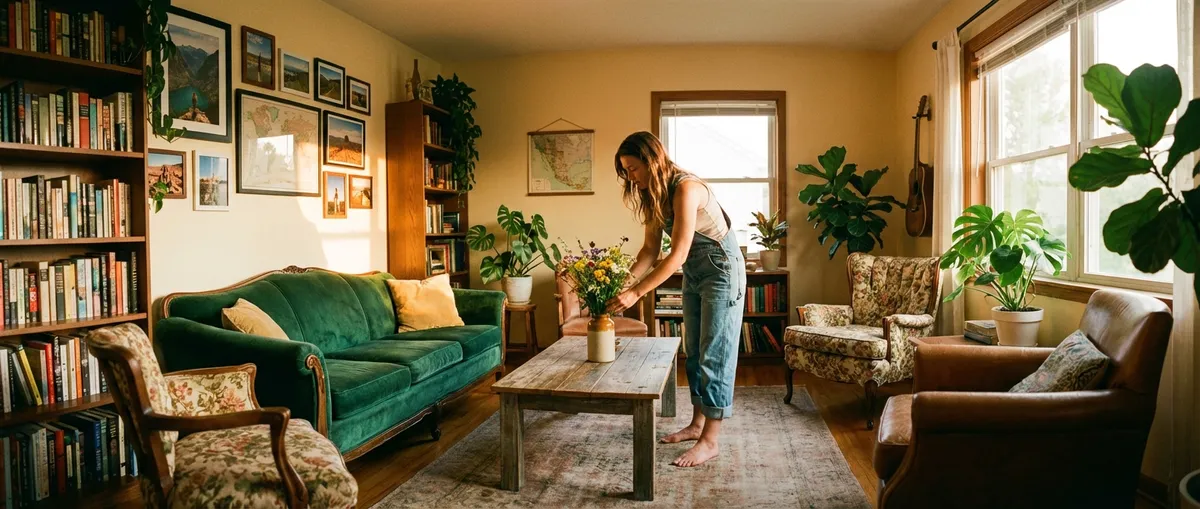
Your living room is where your life quietly collects itself—books on the coffee table, a half-folded throw on the sofa, soft light in late afternoon. It’s more than a “sitting area”; it’s the emotional center of your home. Designing it with intention isn’t about chasing perfection or trends. It’s about creating a space that feels like an exhale the moment you walk in.
This guide will help you shape a living room that is beautiful, welcoming, and deeply personal—no renovation required. Just thoughtful choices, layered over time.
Begin With the Feeling, Not the Furniture
Before you move a single sofa, ask a simpler question: How do I want this room to feel? Calm and airy? Intimate and cocoon-like? Lively and social?
Let that feeling become your compass. If you crave calm, imagine soothing neutrals, gentle textures, and fewer visual distractions. If you want vibrancy, you might lean into bolder color, expressive art, and conversation-friendly layouts. This emotional goal will guide decisions about color, layout, and lighting far better than any trend list.
Walk through your current living room as if you were a guest. Notice where your eye lands first—is it a cluttered TV stand, a too-small rug, or a beautiful window that deserves more focus? Identify one or two “pain points” (awkward furniture arrangement, dim lighting, lack of storage) and one thing you already love (a window, a piece of art, a vintage chair). Your design journey becomes about enhancing what you love and gently editing what isn’t serving you.
To keep yourself anchored, choose three words that define your desired mood—perhaps “warm, relaxed, collected” or “light, refined, welcoming.” Refer to them as you make choices. If a new piece doesn’t support those words, it might not belong.
Shape the Room With Layout, Not Just Furniture
The most elegant living rooms often begin with something invisible: flow. A thoughtful layout is what makes a space feel gracious, even if the furniture itself is simple.
Start by identifying the natural focal point. It might be a fireplace, a large window, or a wall that can host art or a mirror. If there’s no obvious architectural feature, you can create a focal point with a statement piece—like a large artwork or a beautifully styled console behind the sofa.
Arrange seating to encourage conversation, not just TV viewing. Sofas and chairs should “talk” to each other: facing or angled inward, close enough that people don’t have to raise their voices. Even in a small space, one sofa and one accent chair can create a welcoming conversation nook, especially when anchored by a coffee table or ottoman.
Consider traffic paths. You should be able to walk through the room without zigzagging around furniture. Aim for at least 30 inches of clearance in main pathways. If the room feels cramped, remove one piece rather than forcing everything to fit; a slightly emptier space often feels more luxurious than an overstuffed one.
If your living room does double duty—as an office, play area, or dining corner—subtle zoning helps. Use rugs, lighting, and furniture placement to gently signal different “moments” within the same room, so it feels intentional rather than chaotic.
Craft a Quietly Confident Color Story
Color sets the emotional temperature of your living room. You don’t need to be bold to be beautiful, but you do need to be deliberate.
Begin with a base: a wall color or large furniture piece that feels timeless to you. Soft whites, warm beiges, and gentle greiges create an airy, versatile backdrop. Deeper tones—like slate, ink blue, or olive—can make a room feel cocooned and intimate, especially when paired with warm lighting and rich textures.
From there, build a simple palette:
- One dominant neutral (walls or large pieces)
- One or two accent colors (cushions, art, accessories)
- A metal or wood tone (brass, black, walnut, oak) to ground everything
If you’re hesitant about color, introduce it through textiles: a patterned cushion, a throw, or a small ottoman. These are easy to change as your tastes evolve. For more adventurous souls, consider painting only one element—like a console, side table, or built-in shelf—in a richer hue to add character without overwhelming the room.
Remember that natural and artificial light affect how color appears. Check paint samples during morning, midday, and evening to ensure the mood feels right at all times. A color that glows warmly in soft light will make the room feel inviting, even on the greyest days.
Layer Light Like Jewelry
Lighting is to a room what jewelry is to an outfit: the finishing touch that brings everything to life. A well-lit living room rarely relies on a single overhead fixture.
Think in three layers:
- Ambient light: This is your base—ceiling fixtures or wall sconces that gently fill the room with an even glow. Choose warm white bulbs (around 2700–3000K) to avoid a harsh, clinical feel.
- Task light: Reading lamps by a chair, a floor lamp near the sofa, or a desk lamp in a work corner. These make everyday activities feel easier and more comfortable.
- Accent light: Picture lights over art, a small lamp on a sideboard, candles on the coffee table, or a string of warm fairy lights in a glass vessel. These add intimacy and depth.
If you’re on a budget, focus first on table and floor lamps. They’re transformative and move with you if you relocate. Place at least three light sources around the room at different heights. This creates a soft glow rather than pockets of harsh brightness.
Dimmer switches, smart bulbs, or even simple plug-in dimmers can give you flexibility. That way, the same room can feel invigorating during the day and gently cinematic at night.
Textures: The Secret to Effortless Elegance
Texture is what makes a living room feel touchable and lived-in, rather than flat and staged. You might not notice it at a glance, but you feel it immediately.
Start with your biggest surfaces: sofa, rug, and curtains. If you choose a smooth leather sofa, balance it with a soft wool rug and linen or cotton cushions. If your sofa is plush and textural, perhaps choose a low-pile or woven rug for contrast. Combining rough with smooth, matte with glossy, and light with dense creates quiet richness.
Introduce natural materials wherever possible: a jute or wool rug, a wooden side table, a stone tray on the coffee table, a woven basket for blankets. These materials age gracefully and add subtle warmth, even in modern spaces.
Pillows and throws are your easiest tools. Think beyond matching sets. Combine patterns thoughtfully—maybe a stripe, a solid, and a small-scale print in complementary tones. Vary fabrics: velvet, linen, knit, and bouclé can all live happily together when united by color.
Aim for a feeling that invites touch. When a guest instinctively reaches for a throw or runs their hand along a chair arm, you know you’ve succeeded.
Budget-Friendly Magic: Elevate Without Overspending
Creating a refined living room does not require a luxury budget. It asks for intention, patience, and a few well-chosen upgrades.
Focus spending where it matters most:
- A comfortable sofa that supports your posture and will last
- A rug that’s large enough (ideally front legs of sofas and chairs should sit on it)
- Quality lighting that flatters the room
Then, get creative with the rest:
- Shop your home: Move a bench from the bedroom to use as a coffee table, repurpose a dining chair as an accent seat, or bring a bedroom mirror into the living room to reflect light.
- Paint with purpose: A single can of paint can transform a dated TV unit, an old side table, or the inside of a bookcase to create a custom look.
- Thoughtful textiles: Swap tired cushion covers instead of buying new inserts. Add curtain rings with clips to elevate basic panels and create nicer drape.
- Affordable art: Frame meaningful items—a handwritten recipe, vintage sheet music, a beloved postcard, or your own photography—and arrange them as a gallery wall.
- Greenery: A single, well-placed plant (real or high-quality faux) softens corners, adds life, and introduces organic form.
Thrift and vintage shops can be treasure troves for side tables, lamps, and frames. Look past color and focus on shape and quality; you can often refinish or repaint to suit your palette.
Quiet Transformations: Before & After Moments You Can Recreate
You don’t need a full makeover to experience a “before and after.” Think of your living room as a series of small, achievable chapters. Here are a few transformable moments you can borrow:
Corner Reset
- Before: A lonely armchair pushed against a wall, an unused corner collecting clutter.
- After: Slide the chair slightly away from the wall, add a small round side table, a floor lamp behind or beside it, and a soft throw. Place a favorite book or candle on the table. Suddenly, you have a reading nook—a destination, not a dead zone.
Coffee Table Story
- Before: A bare coffee table that feels stark, or one overloaded with remotes and mail.
- After: Place a tray to corral smaller items, add a low stack of beautiful books, a small plant or vase of greenery, and one sculptural object. The table becomes a curated moment rather than random surface space.
Rug Reset
- Before: A tiny rug floating in front of the sofa, making the room feel smaller and disjointed.
- After: Introduce a larger rug that at least reaches under the front legs of your main seating. This simple shift pulls the room together visually, making it feel more intentional and expansive.
Shelf Serenity
- Before: Overstuffed bookcases crammed with items from top to bottom.
- After: Edit ruthlessly. Arrange books both vertically and horizontally, leave some negative space, and intersperse a few objects—ceramic pieces, framed photos, or a small plant. The shelves become a gentle backdrop, not a visual shouting match.
Each of these transformations can be achieved in an afternoon using pieces you already own, perhaps supplemented by one or two carefully chosen additions.
Personal Details: The Heartbeat of the Room
A beautifully styled living room without personal presence can feel like a hotel lobby—lovely, but forgettable. The most memorable spaces are the ones that quietly tell your story.
Consider what matters most to you: travel, family, literature, music, nature, craftsmanship. Let those passions appear in subtle ways:
- A bowl of collected stones, shells, or matchbooks from meaningful places
- A framed map of a city you love
- A vintage instrument on display
- A stack of cookbooks from cuisines that feel like home
- Photographs printed in black and white for a cohesive, timeless look
Display personal items with intention. Group like with like: a cluster of black frames on one wall, or a dedicated shelf for travel mementos, rather than scattering them randomly. This creates both coherence and emotional resonance.
Remember that you are allowed to edit. Just because something has been in the room for years doesn’t mean it must stay. You honor an object more by displaying it thoughtfully—or letting it go—than by allowing it to become invisible background clutter.
Conclusion
A living room with soul isn’t assembled in a weekend; it’s composed over time, like a favorite playlist or a well-loved library. Every small decision—a lamp here, a cushion there, a curated shelf, a cleared corner—adds up to a space that feels more like you.
You don’t need grand gestures to create quiet elegance. You need intention: to choose comfort without sacrificing beauty, to honor personal history without inviting clutter, and to let your living room evolve as your life does.
Begin with how you want to feel. Let that feeling guide your colors, your textures, your layout, and your light. Then layer in the details that tell your story. One thoughtful change at a time, your living room becomes not just a room you pass through, but a place you truly belong to.
Sources
- American Society of Interior Designers (ASID) – Impact of Design - Discusses how interior design influences wellness, comfort, and quality of life
- The Spruce – Living Room Layout Guide - Practical advice on arranging furniture for flow, balance, and conversation
- HGTV – Decorating on a Budget - Ideas and examples for stylish, cost-conscious home updates
- House Beautiful – Lighting Ideas for the Living Room - Inspiration and tips for layering ambient, task, and accent lighting
- Better Homes & Gardens – How to Mix Patterns and Textures - Guidance on combining textiles and patterns for a cohesive, elevated look