
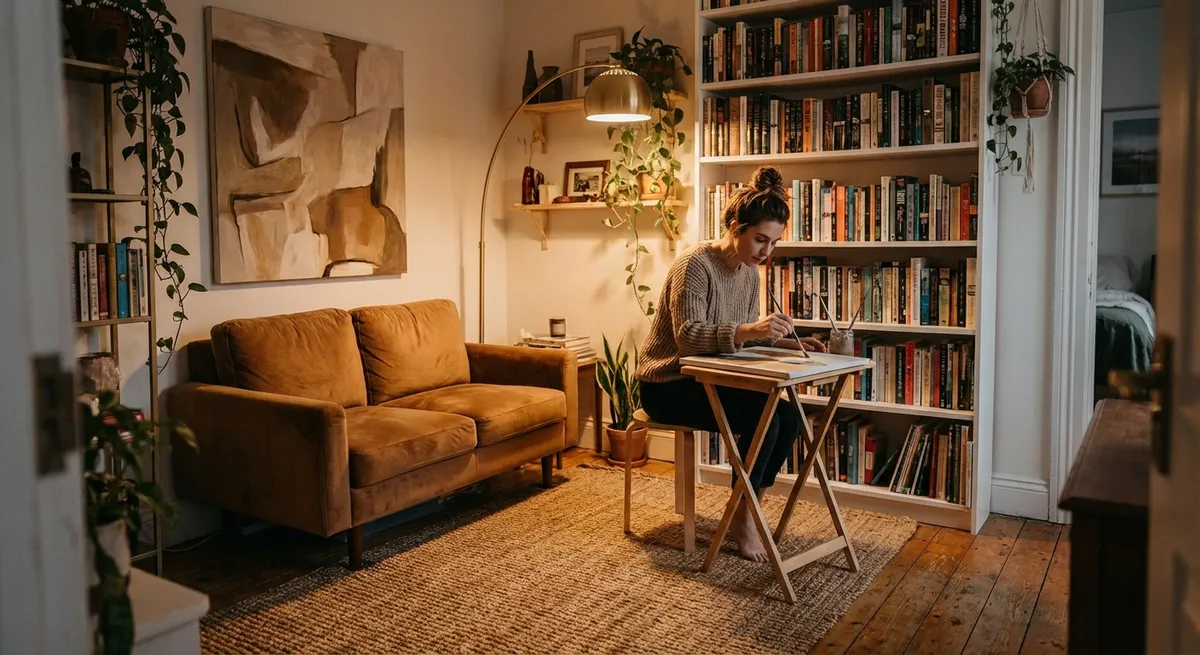
Small spaces are not a limitation; they’re an invitation to be intentional, creative, and deeply personal. Whether you’re in a studio apartment, a compact townhouse, or simply working with a small bedroom or living area, you have the power to turn “not enough room” into “just right.” This guide will walk you through elegant, practical ways to design a home that feels open, refined, and utterly you—no renovation crew required.
See the Potential: Rethinking Your Small Space
Before you buy a single pillow or shelf, pause and look at your space with fresh eyes. Small rooms are often weighed down by what we think they can’t do—host friends, offer storage, feel luxurious. Shift that mindset and your design decisions will follow.
Stand in the doorway and ask three questions:
What do I truly need this room to do? (Relax, work, dine, sleep, entertain?)
Which areas feel cramped—and which feel underused?
Where does natural light fall, and how can I honor it rather than block it?
In many small homes, the “before” is defined by scattered furniture, dark corners, and single-purpose pieces. The “after” becomes possible when every item has both a job and a reason for being loved. When you focus on function first—then style—your space starts to tell a coherent story instead of feeling like a storage unit.
Light, Color, and Texture: The Illusion of Spaciousness
Small rooms don’t always need white walls, but they do need intentional color and light.
1. Choose a gentle, cohesive palette
- Opt for light to mid-tone neutrals on walls—soft white, warm beige, greige, pale clay, or muted sage—to reflect light without feeling stark.
- Limit your palette to 2–3 main colors plus 1–2 accent tones. This visual continuity makes the room feel calmer and larger.
- Use deeper shades in small doses—a navy ottoman, forest green throw, or charcoal lamp—to add sophistication without shrinking the space.
2. Harness natural and layered lighting
- Keep window treatments light: sheer curtains, linen panels, or blinds that fully stack above the window frame to expose glass.
- Layer three types of lighting:
- Ambient (ceiling lights, sconces)
- Task (desk, reading, under-cabinet lights)
- Accent (small lamps, candles, picture lights)
This layered approach softens shadows and visually pushes the walls outward.
3. Use mirrors with intention
- Place a medium-to-large mirror opposite or adjacent to a window to bounce light and extend the view.
- Avoid cluttering walls with many tiny mirrors; one or two well-sized pieces create a stronger feeling of openness.
4. Add texture for quiet luxury
- Use woven baskets, boucle or linen fabrics, jute or wool rugs, and warm wood tones to keep a soft, elegant atmosphere.
- Texture allows a neutral palette to feel rich rather than flat, especially in minimal spaces.
Furniture That Works Twice: Multi-Use, Space-Smart Pieces
In small spaces, every piece of furniture should either earn its keep with storage, serve multiple functions, or take up visually light real estate.
1. Prioritize vertical and hidden storage
- Choose a bed with drawers underneath or use low-profile rolling bins for off-season clothes or linens.
- Add wall-mounted shelves or cabinets up high to draw the eye upward and free floor space.
- Use storage ottomans and benches for blankets, board games, or shoes.
2. Opt for multi-functional anchor pieces
- A sofa bed or daybed turns a living room into a guest room without sacrificing daily comfort.
- A drop-leaf dining table or nesting tables provide dining or work surfaces that tuck away neatly.
- A desk that doubles as a console can be styled beautifully by day and function as a workspace when needed.
3. Choose visually light silhouettes
- Look for slim legs on sofas, chairs, and tables to allow more floor to show, which makes the room feel larger.
- Select a glass, acrylic, or light-wood coffee table to minimize visual weight.
- Avoid giant overstuffed pieces that press against every wall; instead, choose slightly smaller, well-tailored furniture that allows breathing room.
Smart Layouts: Zoning Without Walls
When you don’t have many rooms, you create them through thoughtful “zones.” This is especially transformative in studios, small open-plan living areas, or combined living/dining rooms.
1. Define zones with rugs
- Use a rug to anchor each functional area: one under the seating area, another under the dining table, or beneath the bed.
- In tight spaces, choose a rug that extends slightly beyond the furniture legs so the area feels integrated rather than chopped up.
2. Float, don’t just push to the walls
- Sometimes the best way to open a room is to float the sofa or bed slightly away from the wall.
- Use the back of a sofa as a gentle room divider, placing a narrow console table behind it for storage and styling.
3. Use subtle dividers, not heavy barriers
- Try open shelving, a slim bookcase, a folding screen, or a curtain to separate sleep from living zones in a studio.
- Transparent or open-backed pieces allow light and sightlines to pass through, keeping the space connected yet distinct.
4. Keep pathways clear
- Identify your main walking routes and protect them. Even in a tiny room, a clean path from door to sofa, bed, or kitchen instantly feels more serene.
- Avoid placing obstacles where doors open or where you naturally walk; visual and physical ease are equally important.
Budget-Friendly Styling: Beauty Without the Big Price Tag
You don’t need a designer budget to create a polished, intentional home. A thoughtful mix of high-low choices can look curated and expensive.
1. Invest where it matters most
- Spend a bit more on one or two foundational pieces: a comfortable sofa, a supportive mattress, or a quality rug in a neutral palette.
- These items form the backbone of your space and will carry you through multiple style shifts.
2. Save on styling layers
- Find throw pillows, blankets, trays, and small decor at more affordable retailers or secondhand shops.
- Transform basic pillows with new covers in linen, cotton, or textured fabrics instead of buying entirely new inserts.
3. Embrace DIY and upcycling
- Paint is your most powerful budget tool: refresh a dresser, side table, or outdated chair for a fraction of the cost of new pieces.
- Swap hardware on older furniture with modern knobs or pulls in brass, black, or brushed nickel for an instant upgrade.
- Use removable wallpaper or decals on a single accent wall, inside a closet, or behind open shelving for character that can move with you.
4. Shop secondhand with intention
- Seek solid wood pieces, classic shapes, and items with good bones that can be refinished.
- Use search terms like “mid-century modern,” “cane,” or “parsons” when thrifting online to find timeless silhouettes.
Before-and-After Transformations: Ideas You Can Borrow
Think of these transformations as templates—structures you can adapt to your own home.
1. The Cluttered Studio to Serene Suite
Before: A studio apartment with the bed pushed against one wall, a small sofa facing a TV, and no clear distinction between sleeping and living. Clothes piled on a chair; no real dining or work area.
After:
- The bed is placed on a low-profile platform with storage drawers, layered in soft neutrals and textured bedding.
- An area rug under the bed defines the sleeping zone; a second rug anchors a small seating area.
- A slim open bookshelf sits at the foot of the bed, acting as a partial room divider while displaying books and a few cherished objects.
- A folding bistro table with two chairs near the window serves as dining and workspace.
- Wall-mounted shelves hold decor and essentials, freeing floor space and reducing clutter.
Takeaway: Create zones with rugs and furniture placement; add vertical storage; let one room serve multiple roles without feeling chaotic.
2. The Narrow Living Room to Elegant Lounge
Before: A long, narrow living room with a massive sofa pressed against the wall, a bulky coffee table, and a TV stand that dominates one end. The room feels like a hallway with furniture.
After:
- The large sofa is replaced with a smaller, well-tailored sofa and two slim accent chairs to improve traffic flow.
- A round coffee table softens the long, tunnel-like feel of the room.
- The TV is wall-mounted, and a floating console or narrow credenza adds storage without heaviness.
- Light, floor-length curtains are hung high and wide to visually raise the ceiling and widen the windows.
- A large, appropriately sized area rug connects all seating pieces, making the arrangement feel intentional instead of random.
Takeaway: In narrow rooms, break up the “bowling alley” effect with rounded shapes, smaller-scale seating, and wall-mounted storage.
3. The Overstuffed Bedroom to Restful Retreat
Before: A small bedroom with a bulky bed frame, two large nightstands, a dresser, a chair, and piles of things on every surface. The room feels cramped, dark, and restless.
After:
- The bed is placed on a simple, lower-profile frame without a heavy footboard, topped with airy linens in a limited color scheme.
- One large dresser remains; a small floating shelf takes the place of a full nightstand on one side, while a compact table anchors the other.
- Wall sconces or plug-in lights free up surfaces once used for lamps.
- Under-bed storage bins hold off-season clothing, while baskets house extra blankets and accessories.
- Artwork is kept minimal: one or two meaningful pieces above the bed rather than many small items.
Takeaway: Edit ruthlessly, lighten the heaviest pieces, and keep surfaces as clear as possible for a sense of calm luxury.
Styling Touches: The Details That Elevate
Once the foundations and layout are in place, the magic lives in the details. These finishing touches bring warmth and personality without overwhelming your square footage.
1. Curate, don’t crowd
- Display a few meaningful objects—a vase from your travels, a framed photograph, a favorite candle—instead of many small knickknacks.
- Leave some negative space on shelves and tabletops; it gives the eye a resting place and enhances what is there.
2. Thoughtful art and wall decor
- Choose larger, fewer pieces rather than many tiny prints for a more gallery-like, composed feel.
- Consider a single statement piece over the sofa or bed rather than a busy collage, especially in very small rooms.
3. Bring in life with greenery
- Add one or two plants—a trailing pothos on a shelf, a compact olive or ficus in a corner, or even a few stems in a simple vase.
- If light is limited, opt for low-light plants or high-quality faux greenery to keep things fresh without frustration.
4. Use scent and sound as part of design
- A subtle scented candle, diffuser, or fresh eucalyptus can make a small space feel like a sanctuary.
- Soft background music, gentle textiles underfoot, and consistent color notes all contribute to a cohesive, sensory experience.
Conclusion
A small space is not a compromise; it’s an opportunity to design a life that is considered, beautiful, and deeply aligned with what you truly need. When you choose each piece with intention, honor light and color, and let your rooms serve multiple roles gracefully, your home begins to feel expansive—no matter its size.
Start with one corner: a reading nook, a calmer bedside, a clutter-free entry. As each area transforms, your confidence will grow. Soon, your small space will not only function better, it will tell a grander story—one of elegance, creativity, and a home that holds you exactly as you are.
Sources
- American Society of Interior Designers (ASID) – Small Space Design Tips – Professional suggestions on maximizing style and function in compact rooms.
- IKEA – Small Space Living Ideas – Practical examples of multi-functional furniture and layouts for tiny homes and apartments.
- Apartment Therapy – Small Space Decorating & Design – Real-life before-and-after transformations and budget-friendly styling ideas.
- HGTV – Small Space Design Ideas – Visual inspiration and expert advice for decorating small living rooms, bedrooms, and studios.
- Better Homes & Gardens – Decorating Small Spaces – Guidance on color, furniture placement, and storage strategies tailored to compact homes.