
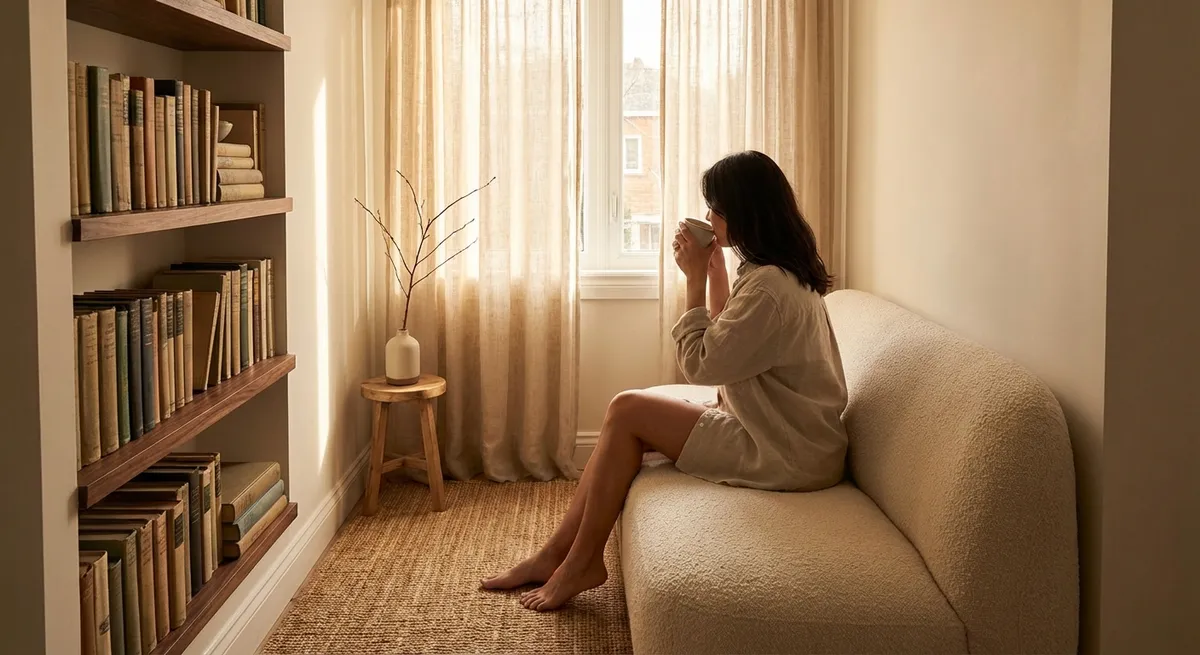
Small spaces carry a certain kind of magic. They ask us to be intentional, to edit with care, and to live closer to what truly matters. When every inch has a purpose, a home begins to feel less like a container and more like a reflection of who you are. This is where quiet luxury meets real life—thoughtful choices, gentle beauty, and spaces that feel deeply, unmistakably yours, no matter their size.
Below, we’ll explore how to shape small rooms into elegant, livable sanctuaries with styling ideas, budget-friendly upgrades, and before-and-after transformations you can adapt to your own home.
Seeing Possibilities, Not Limitations
Before moving a single piece of furniture, reimagine how you want the room to feel rather than how you think it should look.
Close your eyes for a moment and ask: Is this a place for unwinding, creating, working, gathering? The answer will guide every decision that follows—from color palette to seating choices.
In compact rooms, clarity is your best design tool. A space that tries to be everything at once quickly feels cluttered and restless. One primary intention per room (or per zone) is usually enough. A studio apartment can still have a reading corner, a work surface, and a dining spot, but each should be visually defined and gently separated.
Look for “shadow” spaces you may be ignoring: the few inches behind a door, the empty corner beside a window, the slim wall next to a wardrobe. These quiet, overlooked moments often become the most useful—and beautiful—areas once they’re given a purpose.
Small spaces thrive when every choice is both graceful and grounded: a lamp that casts a flattering glow and holds your favorite book, a tray that corrals keys and becomes a daily ritual of arriving home. The goal is not more things, but more meaning.
Light, Color, and Texture: Subtle Tools, Big Impact
In small rooms, light is your most powerful form of alchemy. It can lift low ceilings, soften harsh corners, and make a modest footprint feel gentle rather than cramped.
Natural light, even in small doses, should be treated as sacred. If privacy allows, choose airy curtains in linen or cotton that filter sunlight without blocking it. Mount the rod higher and a little wider than the window to create the illusion of taller, broader openings. If you must use blinds, pair them with soft side panels so the window still feels dressed.
Color sets the emotional temperature. Lighter tones reflect more light and can make walls recede, but “light” doesn’t have to mean white. Misty sage, warm greige, pale mushroom, and soft oat all invite calm and add dimension. For those who crave depth, a small room painted in a single moody shade—walls, trim, even doors—can feel like a cocoon rather than a cave, especially when layered with warm lighting.
Texture brings soul where ornament cannot. In a compact room, you can’t rely on grand architectural details, but you can weave in quiet richness: a nubby throw, a woven basket, a boucle pillow, a worn wood stool. Vary textures gently—smooth (glass, metal) against soft (wool, linen), matte surfaces next to glossy ones—to create visual rhythm without visual noise.
Mirrors remain a classic small-space ally, but placement is everything. Instead of hanging a mirror just to “make the room look bigger,” angle it toward something worth reflecting: a window, a plant, a piece of art. Suddenly, the room feels doubled in character, not just in square feet.
Furniture That Works Twice as Hard (and Looks Beautiful Doing It)
Small spaces don’t demand tiny furniture so much as thoughtful furniture. Pieces that float visually, offer hidden storage, or serve more than one purpose quietly anchor a room without overwhelming it.
Consider a few guiding principles:
- Leggy pieces: Sofas, chairs, and consoles lifted on slim legs reveal more floor and help the eye travel. The room reads as open, even when every inch is spoken for.
- Slim silhouettes: A narrow console behind a sofa can become a desk, a dining perch, or a landing zone without consuming visual space. Look for pieces that are longer rather than deeper.
- Dual-purpose surfaces: Ottomans with storage, nesting side tables, and benches with hidden compartments keep everyday items close while maintaining a tidy, intentional look.
- Foldable or stackable: A drop-leaf table that expands only for guests, stackable stools tucked under a console, or a folding screen that can be put away when not needed all give flexibility without permanent bulk.
Pay attention to visual weight. A glass coffee table might offer more surface area than a tiny opaque one but still feel lighter to the eye. Similarly, a single well-proportioned sofa often looks calmer than multiple small chairs squeezed into a corner.
Most importantly, measure—then measure again. In small spaces, an extra two inches in depth can disrupt circulation or make a door difficult to open. Sketch the room, note traffic paths, and leave graceful room for moving through your home. Breathing space, not expensive pieces, is what reads as luxurious.
Styling Layers: Elevated Details on a Real-Life Budget
Thoughtful styling is where a small space transforms from simply “efficient” to quietly enchanting. You don’t need a large budget; you need a gentle sense of edit and intention.
Start with less. Clear every surface and put back only what supports daily life or sparks genuine pleasure. A bedside table might hold a lamp, a small dish for jewelry, and a single book you’re currently reading. That restraint turns ordinary objects into a vignette rather than clutter.
Play with height and proportion. On a narrow shelf, try a stack of two or three books, a candle atop them, and a small vase beside them. The staggered heights create a pleasing rhythm without needing many items. In small spaces, it’s often better to group decor in compact “islands” rather than scattering objects everywhere.
Use trays and boards. A tray on a coffee table keeps remotes, coasters, and a small floral arrangement feeling deliberate. A long wooden board on a kitchen counter can gather oil bottles, salt, and a plant into one meaningful moment.
Bring in life. Even one trailing vine, a sprig of eucalyptus, or a petite potted herb on the windowsill can soften hard lines. Choose plants that suit your light and lifestyle—hardy options like pothos or snake plants can handle a bit of neglect while still providing sculptural greenery.
Prioritize textiles. Changing pillow covers, adding a small rug, or draping a throw over a chair can refresh a room for far less than new furniture. In tight quarters, stick to a cohesive palette—perhaps shades of sand, dove gray, and forest green—so you can mix patterns without visual chaos.
The secret to elegant styling, especially on a budget, is repetition. Let colors, materials, or shapes echo from one side of the room to the other: a black picture frame that whispers to the black lamp base, the warm oak tray that repeats the tone of your chair legs. This quiet continuity feels polished without requiring designer-level spending.
Before & After: Transformations You Can Recreate
The “Overflow” Room Turned Gentle Guest Retreat
Before: A small spare room cluttered with off-season clothing, extra boxes, and a rarely-used ironing board. One harsh overhead light, beige walls, and no real purpose—just storage with a door.
After: The owner began by editing ruthlessly, relocating or donating everything that wasn’t essential. She kept only a low dresser, which became both storage and a console. The walls were painted a soft, warm greige to reflect more light. A simple daybed with a trundle was added—doubling as a reading spot for everyday life and a guest bed when needed.
A slim floating shelf above the bed created a ledge for framed art and a small plant instead of bulky side tables. Lightweight linen curtains softened the single window, and a small jute rug grounded the space. A table lamp with a warm bulb replaced the overhead glare, and a woven basket tucked in the corner held spare blankets.
The room is now a serene guest nook and personal retreat, achieved with just a few new pieces and mindful editing.
Key ideas to borrow:
- Transform “catch-all” rooms by giving them a clear primary purpose.
- Use a daybed or futon to merge lounge and sleep functions.
- Replace visual heaviness (overstuffed furniture, multiple small tables) with a few streamlined, multi-use pieces.
The Sliver of Entry Turned Daily Ritual
Before: A narrow hallway right inside the front door, with shoes scattered on the floor and mail piling up on any flat surface nearby. No clear spot for keys, bags, or coats.
After: Instead of trying to force in a bulky console, the homeowner mounted a slender wall shelf at waist height. Below it, a row of simple hooks held bags and light jackets. A single, elegant wall mirror above the shelf bounced light from the adjacent room and offered a last glance before heading out.
On the small shelf: one lidded bowl for keys, a tray for mail, and a small bud vase. A low-profile shoe rack fit neatly beneath, keeping footwear contained and slightly elevated off the floor, making the space feel less crowded.
Suddenly, the entry became a daily ritual point—arriving home meant placing keys in their bowl, sorting the mail into “to handle” and “to recycle,” and hanging up the day’s coat.
Key ideas to borrow:
- Use vertical space when floor space is scarce.
- Design functional “landing spots” that match your actual routines.
- Let a single mirror and one or two beautiful objects elevate a hardworking zone.
Gentle Upgrades for Every Budget
You don’t need a full renovation to change how a small space feels. Incremental, thoughtful upgrades can be just as transformative.
If your budget is very modest, focus first on:
- Lightbulbs and lamps: Warm, soft-white bulbs and at least two to three light sources per room (overhead, floor, table) can transform atmosphere instantly.
- Textiles: Swap one tired rug, threadbare throw, or dated pillow cover for a neutral, tactile alternative that works with what you have.
- Decluttering: Removing what no longer serves you is both free and profound. The absence of excess is its own kind of luxury.
- Paint: One weekend and a few cans of thoughtfully chosen paint can visually reorder a space—lightening ceilings, unifying mismatched trim, or creating a soft accent wall behind a bed or sofa.
- Hardware: Replacing cabinet pulls, doorknobs, or basic hooks with cohesive, elevated hardware (brushed brass, matte black, or warm nickel) gives small spaces a tailored look.
- One anchor piece: Invest in a single, well-made item you use daily—an ergonomic but beautiful desk chair, a supportive mattress with a simple frame, or a compact sofa in a timeless fabric.
With a bit more flexibility, consider:
Stay guided by this question: “Will this make daily life feel more graceful?” If the answer is no, your budget is better spent elsewhere—or not at all.
Conclusion
Small spaces invite us to live with more intention and less excess, to choose pieces that carry weight beyond their price or footprint. When we edit carefully, honor light, and let functionality and beauty share the same seat, even the most modest room can feel quietly luxurious.
You don’t need soaring ceilings or an expansive floor plan to create a home with presence. You need only a clear sense of how you want to live, the courage to let go of what you don’t need, and the willingness to soften each corner with care.
In the end, a small space styled with soul doesn’t whisper “not enough.” It says, with calm certainty, everything I need is right here.
Sources
- American Society of Interior Designers (ASID) – Small Space Design Insights – Professional perspectives on maximizing function and comfort in compact interiors
- NYT Wirecutter – Best Small-Space Furniture – Tested recommendations for space-saving furniture and layout ideas
- IKEA Small Space Living Ideas – Practical visual examples of multifunctional furniture and storage in small homes
- HGTV – Decorating Small Spaces – Tips, photos, and styling strategies tailored to compact rooms
- Houzz – Small Space Design Photos and Articles – Real-home galleries and expert articles to inspire layouts and transformations