
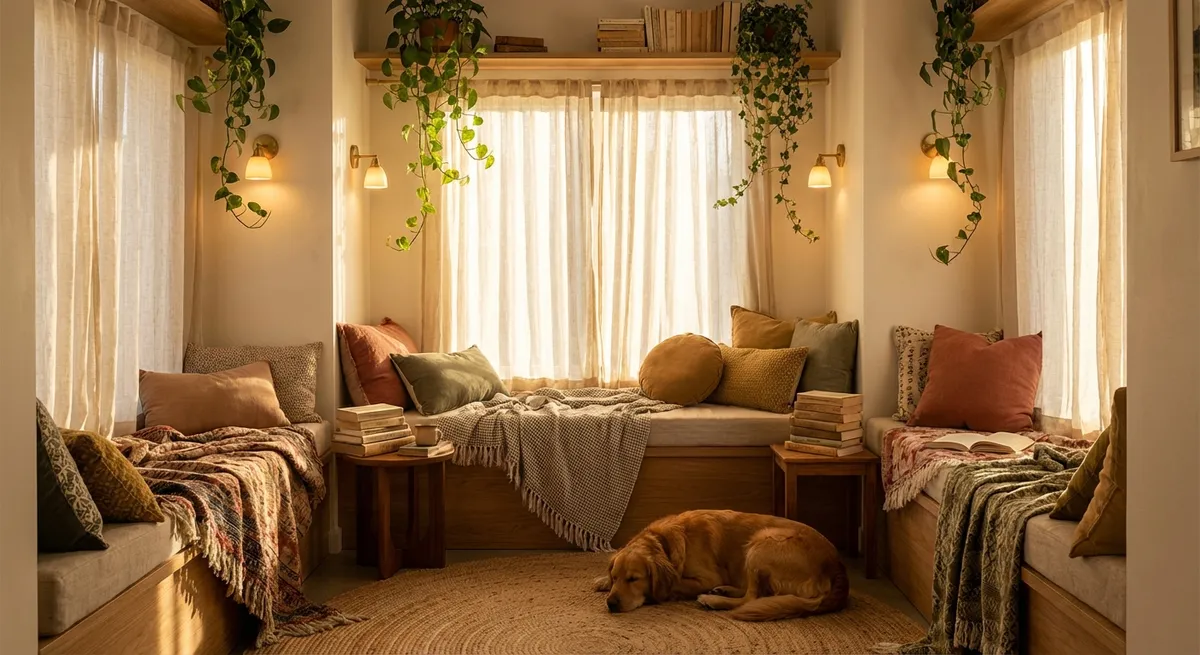
Small spaces ask us a gentle question: What truly matters to you? When every inch counts, your home becomes less about square footage and more about intention, comfort, and story. With thoughtful design, even the tiniest studio, narrow hallway, or compact bedroom can feel gracious, luminous, and deeply personal—never cramped or cluttered.
This guide will help you shape a small space that feels like a breath of fresh air: calm yet character-filled, elegant yet practical, and entirely your own. We’ll explore styling ideas, budget-friendly upgrades, and “before-and-after” transformation concepts that you can adapt to any home, no matter its size.
Begin with a Vision, Not the Measurements
Before you buy a single pillow or paintbrush, pause. Small spaces become overwhelming when we start with constraints—“too narrow,” “too dark,” “too small”—instead of possibilities.
Close your eyes and ask:
- How do I want to feel in this space? Rested, energized, focused, nurtured?
- What one thing must this room do beautifully? Sleep, work, gather, create?
- What could I remove to let the space breathe?
Write down three words that capture your vision—for example: calm, layered, luminous or vibrant, cozy, eclectic. Let every design decision serve those words. A small space thrives on clarity; when your choices align with a clear feeling, even a tiny room becomes quietly cohesive.
Next, walk through the space as if you’re a guest. Notice:
- Where your eye lands first (this can become your focal point).
- Where clutter naturally gathers (these spots need storage solutions).
- Any dark corners (ripe for lighting or mirrors).
This simple observation, paired with your vision words, becomes your design blueprint—more powerful than any floor plan.
Curating Instead of Crowding: Furniture That Works Hard and Looks Graceful
In a small space, furniture is not background—it’s architecture. Each piece should feel intentional, airy, and multi-purpose, without sacrificing comfort.
Choose pieces with lightness and lift
Look for furniture that visually lifts off the floor:
- Sofas and armchairs with visible legs (instead of heavy skirts) create a sense of openness.
- Glass, acrylic, or slender metal coffee tables virtually disappear, letting the room feel larger.
- Open-frame bookshelves and side tables keep sight lines flowing.
Neutral upholstery in soft, light tones—warm white, stone, pale greige, or muted pastels—reflects light and makes the room feel expansive, while textured fabrics (bouclé, linen, woven cotton) add warmth and depth.
Let every piece earn its place
Ask of each large item: What else can you do here?
- A storage ottoman that serves as coffee table, extra seating, and blanket storage.
- A daybed that acts as sofa by day and guest bed by night.
- A drop-leaf or wall-mounted folding table that shifts from desk to dining surface.
- Nesting tables that tuck away neatly when not needed.
When your furniture quietly multitasks, you gain freedom—less clutter, more breathing room.
Scale with intention—not everything must be tiny
A common misconception is that small spaces require only small furniture. Too many diminutive pieces can make a room feel busy and restless. Instead:
- Use one or two larger, comfortable anchor pieces (a generous sofa, a full-size bed) and keep the surrounding elements light and minimal.
- Avoid bulky armrests and overstuffed silhouettes; opt for clean lines with soft edges.
The result is a room that feels considered rather than cramped.
The Soft Architecture of Color and Light
Color and light are the most gentle, transformative tools you have—and they’re especially powerful in compact rooms.
Build a calm color story
Start with a light, cohesive base that flows between spaces: shades of warm white, soft mushroom, or pale greige. Then layer in gentle contrast with:
- One deeper accent: smoky blue, olive, cocoa, or charcoal used on a single wall, built-in, or interior door.
- Natural textures: wood, rattan, jute, linen, wool—to keep the palette from feeling flat.
In open-plan small spaces, limit your main colors to a tight family—perhaps three to five tones repeated in textiles, art, and accessories. Repetition builds visual harmony, which reads as spaciousness.
Treat lighting as layers, not an afterthought
Overhead lighting alone can make a small room feel stark and shallow. Instead, layer three types of light:
- Ambient – Soft general light (a shaded ceiling fixture or paper lantern).
- Task – Focused lights for activities (a desk lamp, reading sconce, under-cabinet strip).
- Accent – Warm glows that create depth (picture lights, candles, small table lamps on shelves).
Use warm bulbs (around 2700–3000K) to maintain a gentle, flattering ambience in tight spaces. Dimmable bulbs or smart plugs allow the same room to shift from energizing morning light to cocoon-like evening light with a tap.
Invite more light without major renovations
If you can’t add windows, you can still amplify light:
- Hang mirrors across from or adjacent to windows to bounce natural light further into the room.
- Choose semi-sheer curtains in a fabric close to your wall color so they blur, not block, light.
- Use reflective accents—glass, glazed ceramics, metallic picture frames—to catch and scatter light.
Even one well-placed mirror and a brighter bulb can make a once-dull corner feel unexpectedly alive.
Styling Small Spaces: Artful Layers, Not Extra Stuff
Decor in a compact room should feel like jewelry: carefully chosen pieces that highlight your best features without overwhelming them.
Edit first, then style slowly
Begin by clearing surfaces—side tables, dressers, countertops—and returning only what you truly love or use daily. Then style in simple “vignettes”:
- Rule of three: Cluster items in odd numbers (3 or 5), varying height and texture.
- One anchor, two companions: For example, a lamp (anchor), a stack of books, and a small sculpture or candle.
- Travel low to high: Start with a tray or stack of books, then build up with a vessel or framed print.
Leave generous empty space between groupings; the negative space is what grants an elegant, uncluttered feel.
Use textiles to soften, ground, and define
Textiles are where a small space can truly sing:
- Rugs: A larger rug often makes a room feel bigger than multiple small ones. Choose one that fits under the front legs of your main furniture to visually anchor the space.
- Throws and pillows: Stick to a unified palette, mixing texture rather than many colors—think boucle next to velvet, nubby linen with smooth cotton.
- Curtains: Hang them higher and wider than the window to create the illusion of height and broader windows.
Textiles are also your easiest refresh: swapping a rug or pillow covers can transform the mood of a room in one afternoon.
Budget-Friendly Transformations That Feel Truly Luxurious
You don’t need a full renovation to create a striking before-and-after. With intention, even modest updates can look quietly high-end.
Paint as your most powerful tool
A can of paint can rewrite the story of a room:
- Unified backdrop: Paint walls, trim, and doors in the same soft shade for a calm, cocoon-like effect that blurs architectural interruptions.
- Color-zoning: In a studio, use paint to define zones—perhaps a warm neutral for the sleeping area and a soft green or blue for the “living” corner.
- Ceiling magic: In a low room, keep ceilings a shade lighter than the walls; in a narrow hall, consider painting walls and ceiling the same color to create a seamless, intimate tunnel of calm.
Pair painted walls with simple, cohesive hardware (matching door handles, cabinet pulls, or curtain rods) for an instant sense of polish.
Simple upgrades with big visual impact
Consider small, strategic changes:
- Swap mismatched lamps for two or three fixtures in a similar style and finish.
- Replace busy, bulky storage bins with woven baskets or simple canvas boxes in a single color family.
- Add a slim console or floating shelf in an entry for keys and mail, keeping the floor clear.
- Use peel-and-stick wallpaper on a single wall, bookcase backing, or the side of a wardrobe for a touch of pattern without commitment.
When you repeat materials—brass, black metal, warm wood—throughout the room, humble pieces begin to look intentional and elevated.
Before-and-After Ideas You Can Adapt to Your Own Home
You may not see dramatic TV-style makeovers every weekend, but you can achieve quietly stunning transformations with thoughtful changes. Here are conceptual before-and-after scenarios you can borrow from.
The “Floating” Living Room
Before:
A small living room with a dark, overstuffed sofa pressed against the wall, a heavy coffee table in the center, mismatched small rugs, and a single bright overhead light. The room feels more like a waiting area than a sanctuary.
After (inspired changes you can try):
- Replace the dark sofa with a light, clean-lined option on legs, floated slightly off the wall to create an airy feel.
- Choose one generous rug that sits under the sofa and chairs, unifying the seating area.
- Swap the heavy coffee table for a light, open-frame or glass-topped piece; tuck a small ottoman underneath for extra seating.
- Introduce layered lighting: a floor lamp by the sofa, a small table lamp on a side table, and softer, warmer overhead lighting.
- Add a large piece of art or a simple gallery wall above the sofa to draw the eye upward.
Result: The same dimensions, but a room that now feels expansive, intentional, and welcoming.
The Quiet Multi-Tasking Bedroom
Before:
A tiny bedroom dominated by a large bed, piles of clothes, a cluttered nightstand, and a desk crammed into a corner. The room feels chaotic, not restful.
After (practical shifts):
- Choose a bed frame with drawers beneath or space for low bins; relocate off-season clothing and spare linens here.
- Replace the bulky nightstand with a slim wall-mounted shelf and a sconce to free floor space.
- Mount a floating desk or a shallow console opposite the bed; use a backless stool that can tuck away fully.
- Keep a restrained palette: crisp white bedding, one accent throw, two coordinating pillows.
- Add a single, soothing piece of art or a small mirror above the bed; avoid filling every wall.
Result: A space that supports both rest and focus, without feeling overstuffed.
The Purposeful Entry Nook
Before:
A narrow entryway with shoes scattered near the door, coats draped over a chair, and mail piled on the nearest surface. No defined storage, no welcome.
After (achievable updates):
- Install simple wall hooks or a slim coat rack at one consistent height for bags and outerwear.
- Add a narrow bench with baskets underneath for shoes and everyday essentials.
- Place a floating shelf or tiny console above the bench for keys, mail, and a small tray.
- Hang a mirror to reflect light and provide a quick “last look” before leaving.
- Add a runner rug to lengthen the space and bring warmth underfoot.
Result: The same footprint, but now an intentional threshold that sets the tone for the rest of your home.
Living Lightly but Fully: Maintaining Beauty in Small Spaces
Design is only the beginning; how you live with your space each day allows that beauty to endure.
- Practice gentle editing: Once a month, walk through your home with a small basket and gather anything that feels like visual noise. Rehome, donate, or recycle.
- Adopt a “one in, one out” habit: When a new decorative piece or throw blanket comes in, let another go.
- Embrace rituals: A two-minute reset each evening—folding a throw, clearing the coffee table, dimming lights—signals closure to the day and keeps small spaces serene.
- Let your home evolve: As your life shifts, allow your rooms to change with you. That corner desk may one day become a reading chair; the gallery wall might transform into a single oversized print.
A small space, thoughtfully designed, can hold a surprisingly generous life. It invites you to live with intention, surround yourself with what you truly love, and discover how elegance often thrives within gentle limits.
Conclusion
Small spaces are not a compromise; they’re an invitation—to edit with care, to choose with intention, and to create rooms that are intimately aligned with who you are. With layered light, multi-tasking furniture, thoughtful color, and a few budget-friendly upgrades, even the most modest square footage can feel gracious, inspiring, and deeply restful.
You don’t need more space to live beautifully. You need a clear vision, a few well-chosen pieces, and the courage to let your home reflect your truest self—quietly, elegantly, and on your own terms.
Sources
- American Society of Interior Designers (ASID) – Small Space Design Tips – Practical guidance from professional designers on maximizing compact rooms
- IKEA – Small Spaces Inspiration and Solutions – Real-world examples and product ideas for multifunctional, budget-conscious small-space living
- Apartment Therapy – Small Space Living & Organization – Before-and-after makeovers, styling ideas, and organization strategies for apartments and studios
- The Spruce – Small Space Decorating Essentials – Comprehensive tips on color, furniture scale, and layout choices for small homes
- Harvard Graduate School of Design – “Living Small” Discussion – Design perspectives on compact living and how thoughtful planning can enhance quality of life