
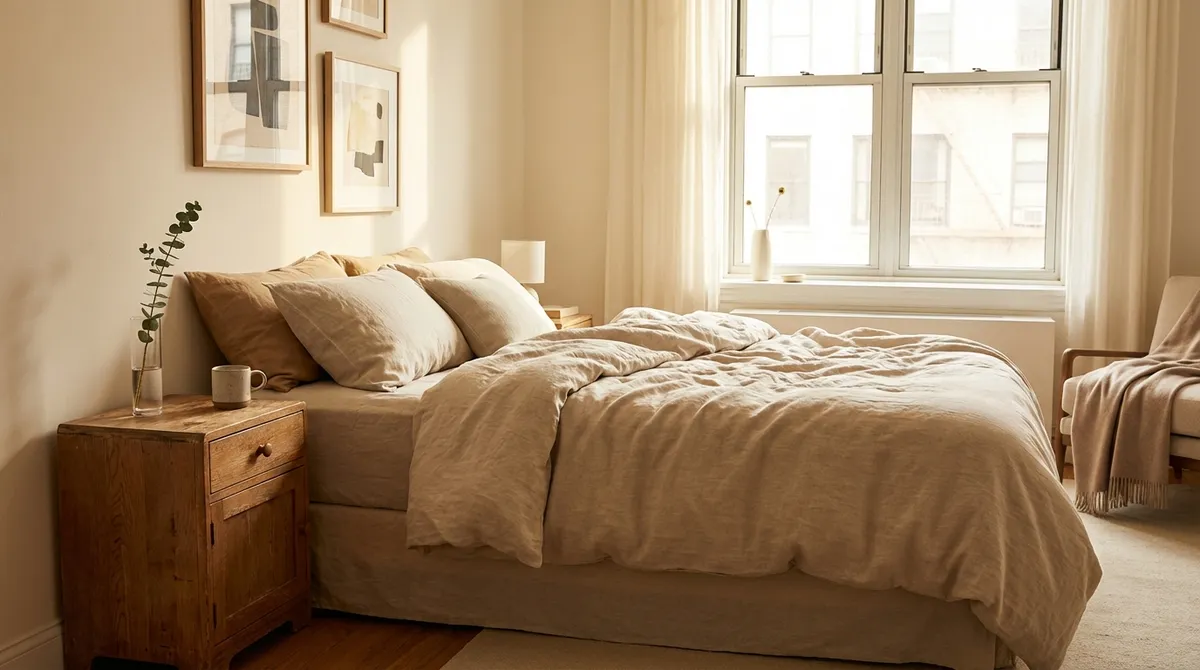
A beautiful bedroom doesn’t begin with new furniture or a fresh coat of paint—it begins with how you want to feel when you wake up and when you settle in at night. Calm, restored, inspired, cherished: your space can hold all of that, even if you’re working with a small room, a tight budget, or hand‑me‑down pieces. With a few thoughtful choices, the bedroom you have right now can slowly become a room that feels like quiet luxury, lived in your own way.
In this guide, we’ll explore gentle, practical shifts—styling tips, budget‑friendly ideas, and simple before‑and‑after transformations—that bring more harmony, beauty, and soul to the place where each day begins and ends.
Begin With Feeling: Defining the Mood Before the Makeover
Before you move a single piece of furniture, pause and define the mood you’re craving. Do you long for a soft retreat, a creative studio‑bedroom, a bright and airy wake‑up space, or a cocoon-like sanctuary? Choosing three to five words—such as “light, calm, airy” or “warm, grounded, cocooned”—will quietly guide every decision that follows.
Consider the light in your room throughout the day. A north‑facing bedroom may welcome warm, honeyed textiles and soft ambient lighting, while a south‑facing room might feel best with cooler tones and gauzy curtains that gently filter sunlight. Notice what already works: perhaps your window placement is lovely, or a vintage dresser has beautiful lines. Let those strengths stay, and design around them.
If you share your bedroom, collaborate on the mood: overlap your words and let them become the brief for your redesign. When choices feel overwhelming, return to this simple question: “Does this color, textile, or object support the feeling we named?” Let that be your compass, especially as you begin layering decor over time instead of buying everything at once.
The Art of a Beautiful Bed: Layers, Textures, and Everyday Ease
The bed is the visual anchor of the room, but it doesn’t need to be elaborate to feel refined. Start with the foundation: a supportive mattress and breathable, comfortable sheets. Prioritize natural fibers when possible—cotton, linen, or bamboo blends are kind to the skin and temperature‑regulating, making the whole room feel more restful.
Think in layers rather than matching sets. A simple approach: a fitted sheet, a flat sheet turned down neatly, a lightweight quilt or coverlet, and a folded throw at the foot of the bed. Mix textures within a similar color family—crisp cotton with a nubby knit throw, washed linen pillowcases with a quilted coverlet. The palette can be whisper‑soft (sand, ivory, dove grey) or moodier (ink, olive, merlot), as long as it echoes the feeling you defined earlier.
For pillows, aim for balance between comfort and clarity. Two sleeping pillows, two larger shams, and one small accent pillow are often enough to feel styled yet manageable. If making the bed feels like a chore, reduce the number of decorative layers until the ritual becomes quick and satisfying. Tuck, smooth, and gently fluff each morning—not as a duty, but as a brief act of care for your future self.
Budget‑friendly tip: instead of replacing your duvet or quilt, invest in one beautiful throw or a pair of textured pillow covers in a color that shifts the mood of the room. A single well‑chosen textile can make the entire bed feel thoughtfully curated.
Nightstands With Intention: Curating a Calm Bedside Story
Nightstands are small, but they quietly shape how you begin and end each day. Rather than letting them collect clutter, treat each bedside like a tiny still life. Start with practicality: a lamp at a comfortable height for reading, a coaster or tray for water, a place for your current book or journal, and maybe a catch‑all dish for jewelry or a watch.
From there, layer one or two beautiful, meaningful items. This could be a small framed photograph, a sprig of greenery in a bud vase, a scented oil or candle you light only in the evening, or a small ceramic piece you love to touch. Keeping surfaces mostly clear allows the few chosen objects to feel intentional, not busy.
If you don’t have matching nightstands, lean into the difference. Echo the left and right sides with a shared material or color (for example, similar lamps or matching trays), so the room feels cohesive while still personal. A stack of sturdy books can serve as a bedside “table” in a pinch, especially in small or temporary spaces.
To keep spending minimal, consider updating only the details: swap bright white bulbs for warm, soft‑glow ones, or replace a dated lamp shade with a simple linen drum shade. These small changes can dramatically soften the way your bedroom feels after dark.
Walls That Embrace: Color, Art, and Simple Architectural Tricks
Your bedroom walls can hold mood without being loud. Even if painting isn’t an option, you can transform the feeling of the room with color, art, and a few simple illusions.
If you can paint, choose hues that support rest. Soft neutrals—warm whites, gentle greiges, muted sages, and dusty blues—are timeless and easy to live with. For a cocoon effect, consider painting the walls, ceiling, and trim in the same color but different sheens; this wraps the room in a unified softness. If you’re drawn to deeper colors, confine them to a single wall behind the bed or to smaller areas like the inside of a closet or nook.
Art doesn’t need to be expensive or gallery‑worthy. A collection of black‑and‑white photographs, botanical prints, or even pages from a favorite art book in simple frames can feel considered and cohesive. Hang pieces slightly lower than you think, especially over the bed, so the art relates directly to the furniture instead of “floating.”
For renters or those on a tight budget, explore removable wallpaper, fabric wall hangings, or a large canvas painted in a single color as a DIY “headboard” substitute. A tall, vertical mirror can visually stretch the height of the room and bounce natural light—position it opposite a window when possible to maximize the effect.
Light That Gently Shifts: Layering Glow From Morning to Midnight
In a bedroom, lighting isn’t just functional; it’s emotional. A single overhead fixture can feel harsh, while a layered approach creates softness and depth. Aim for three types of light: ambient, task, and accent.
Ambient light might come from a ceiling fixture or a floor lamp that fills the room with a low, even glow. Consider replacing very bright bulbs with warm‑temperature LED bulbs and using dimmers where possible. Task lighting includes bedside lamps or sconces for reading—set them at a height that casts light onto your book, not directly into your eyes.
Accent lighting is where warmth and personality appear: a candle on a tray, a very softly lit string of fairy lights draped over a headboard or mirror, or a small lamp on a dresser that you turn on in the early morning while the room is still hushed. These small pools of light make the room feel intimate and gently layered.
Budget‑friendly transformations might include swapping cool bulbs for warm ones, adding battery‑operated puck lights or stick‑on sconces for renters, or simply reorganizing your lamps so that the bed area feels more like a soft halo than a spotlight. Think in terms of “evening mode” and “morning mode,” and arrange your switches and lamps so you can glide between the two.
Storage That Disappears: Creating Calm by Hiding the Necessary
A beautiful bedroom doesn’t need to be minimal, but it does benefit from visual quiet. When everyday items are tucked thoughtfully out of sight, the mind rests more easily. Think of storage as the quiet skeleton of your room: mostly invisible, but essential to its grace.
Under‑bed boxes are practical for off‑season clothing or spare linens; choose covered options in a single color so peeking under the bed doesn’t feel chaotic. Baskets can soften the base of a wardrobe or dresser, holding slippers, yoga mats, or extra blankets. Drawer dividers and simple closet organizers maximize what you already have without requiring a full renovation.
On top of dressers, keep only a restrained selection of items: a tray for jewelry, a few folded scarves, a ceramic bowl for perfume bottles, perhaps a houseplant. Containing things in trays or boxes instantly makes them feel intentional, even if they’re everyday items.
If buying new storage isn’t in the budget, repurpose what you already own: unused baskets from the living room, shoeboxes wrapped in kraft paper for drawer dividers, or a small side table as a makeshift bedside with hidden storage beneath a floor‑length cloth. The goal isn’t perfection; it’s simply to give everything a home so your surfaces can breathe.
Textiles as Transformation: Curtains, Rugs, and Small Luxuries
Textiles are often the most accessible way to alter the character of your bedroom without major changes. Curtains, rugs, and small fabric elements like cushions and throws can help a room feel grounded, serene, and finished.
If possible, hang curtains higher and wider than the window frame to elongate the room and let in more light. Even affordable panels can look elegant when they skim the floor rather than stopping short. Sheer curtains layered with blackout panels pair function (sleep) with romance (soft daylight).
A rug—whether large and under the bed or a pair of smaller runners on either side—adds instant warmth. Look for textures that feel good under bare feet: low‑pile wool, cotton flatweave, or even a plush synthetic if allergies or budgets are a concern. For a small room, a rug that extends beyond the bed on all visible sides makes the entire space feel more generous.
Lean into small, almost‑everyday luxuries: a soft robe hung on the back of the door, a woven basket for extra blankets in winter, or a simple linen throw that you pull up for afternoon rest. You don’t need many of these pieces; one or two well‑chosen textiles can quietly shift the room from purely functional to quietly indulgent.
Budget‑Friendly Before & After: Three Realistic Mini Transformations
Sometimes the most powerful transformations come from rearranging and refining what you already own. Here are three simple “before and after” concepts you can recreate in your own way:
1. From Busy to Breathable Bed Wall
- Before: A bed pushed against a wall with mismatched bedding, several small art pieces hung randomly above, and different lamps on each side.
- After: The bed centered (where possible), plain white or neutral sheets with one accent pillow, a single larger artwork or framed fabric panel above the bed, and two lamps that share at least one unifying element (shape, color, or shade). No new furniture required—just editing, symmetry, and a calmer focal point.
- Before: A corner piled with laundry, spare boxes, or bags that have yet to find a home.
- After: Clear the area; place any existing chair from elsewhere in the home, add a cushion or folded throw blanket, and a small side table or stacked books as a perch for tea or a candle. A floor lamp or clip‑on lamp becomes focused reading light. The transformation costs nothing if you shop your home and turns visual noise into a purposeful, restful corner.
- Before: One bright overhead light that feels jarring at night, with no alternative sources.
- After: Keep the overhead fixture for cleaning and getting dressed, but rely on two or three lower‑level lights for evenings: bedside lamps, a small lamp on the dresser, or battery LED candles in glass holders. Replace bulbs with warm‑temperature options and consider a plug‑in dimmer for the main fixture. The room instantly feels gentler, even if nothing else has changed.
2. From Catch‑All Corner to Soft Reading Nook
3. From Harsh Light to Evening Glow
These tiny “stories” are less about buying new pieces and more about redirecting attention. By taming clutter, defining a focal point, and softening light, you reshape the energy of the room in very real, very accessible ways.
Tending the Atmosphere: Scent, Sound, and Daily Rituals
The elegance of a bedroom lies as much in its atmosphere as in its furniture. Scent, sound, and small rituals can turn a nicely decorated room into a place that feels truly lived‑in and cherished.
Choose one or two signature scents for the bedroom: perhaps a lavender linen spray, a sandalwood candle, or citrus essential oils diffused in the morning. Keeping fragrance gentle rather than overpowering maintains the room as a place of rest. If candles aren’t an option, a small bowl of dried herbs or a few drops of essential oil on a cotton pad tucked discreetly on a shelf can create a whisper of scent.
Sound matters, too. A simple white‑noise machine, a small speaker for soft music, or even a tabletop fountain can muffle outside noise and create a cocoon‑like environment. Think about mornings as well as evenings: perhaps a quiet playlist for slowly waking, or a podcast that accompanies your weekend linen‑changing ritual.
Most importantly, anchor your bedroom with one or two daily acts of care: making the bed, clearing the nightstand before sleep, or spending five minutes each evening putting clothes back in their places. These gestures don’t have to be perfect; they simply remind you that this room is not a storage space, but a sanctuary you deserve to inhabit fully.
Conclusion
Your bedroom does not need to be large, expensive, or perfectly styled to feel deeply beautiful. It only needs to be honest about the way you live and intentional about the way you want to feel. By beginning with mood, thoughtfully refining what you already own, softening light, and creating quiet zones of comfort, you can transform even the most ordinary room into a space that feels like an exhale.
Allow the changes to unfold slowly. Swap one lamp, then edit your nightstand. Tuck away clutter, then add a single new textural layer. Over time, these gentle decisions will accumulate into something profound: a bedroom that greets you, night after night and morning after morning, with the quiet luxury of being truly at home.
Sources
- National Sleep Foundation – Bedroom Environment – Research‑based guidance on how light, noise, temperature, and decor affect sleep quality.
- Mayo Clinic – Sleep Tips: 6 Steps to Better Sleep – Explains how a restful bedroom and consistent routines support better rest.
- Harvard T.H. Chan School of Public Health – Blue Light and Sleep – Details how lighting choices (especially at night) affect circadian rhythm and sleep.
- IKEA – Bedroom Ideas & Design Inspiration – Practical, budget‑friendly visual examples of bedroom layouts, storage, and textile layering.
- The Spruce – How to Arrange a Small Bedroom – Specific layout and furniture‑placement tips that help maximize comfort and function in compact rooms.