
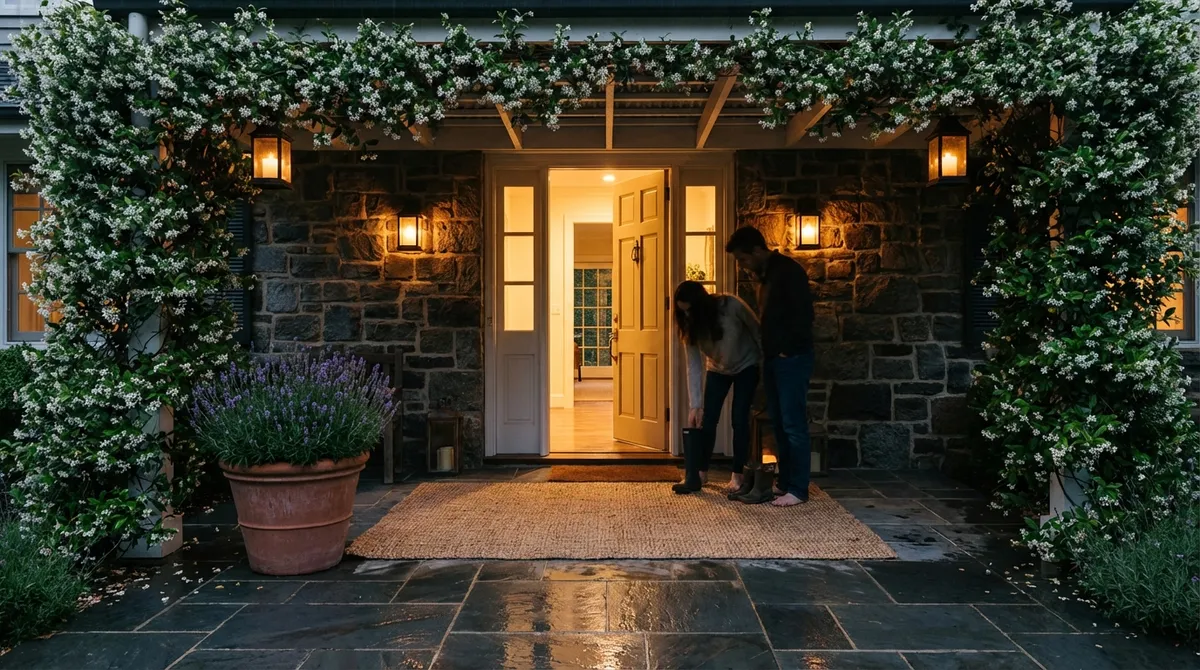
There is a quiet kind of magic in the first step you take toward home. The sound of gravel beneath your shoes, the soft glow near the door, the way a single chair on a porch seems to say, “You’re expected. You’re safe here.” Outdoor living doesn’t have to mean sprawling decks and elaborate kitchens; sometimes the most powerful transformation begins at the threshold—your front stoop, small balcony, or modest landing—where indoor comfort and outdoor air gently meet.
This is where we’ll begin: turning the overlooked in-between spaces of your home’s exterior into a warm, elegant welcome that feels deeply personal and beautifully lived-in.
Rethinking the Entry: From Pathway to Invitation
Instead of imagining the front of your home as something purely functional—just a way to get to the door—treat it as the opening chapter of your home’s story. The path, the plants, even the house numbers are all part of a quiet narrative you’re crafting.
Start with how you want the space to feel in a single word: calm, joyful, grounded, playful, timeless. Let that word guide your choices. A “calm” entry might lean toward soft neutrals, rounded planters, and subtle lighting. A “joyful” entry might lean into colorful pots, striped cushions, or a bold door color.
Consider:
- Sightlines: Stand at the curb or the end of your walkway and look in. What is your eye drawn to first? A mess of shoes? A dark corner? Or a pretty pot near the door? Shift visual clutter away from the main view and let one or two beautiful elements quietly lead.
- Scale: Tall planters can anchor a small porch; a low, wide planter can soften the edge of stairs. Resist overcrowding—negative space makes each chosen piece feel more intentional.
- Texture: Mix smooth (painted wood, glazed ceramic) with organic (wicker, stone, woven doormats) to echo the blend of indoors and outdoors.
Even in an apartment hallway, you can introduce that sense of approach with a slim console-style shoe bench, a small plant, and good lighting near your unit’s door (if allowed). The goal is the same in any setting: to make the journey to your door feel like an arrival, not an afterthought.
Light as a Gentle Guide
Lighting is where your entry truly comes alive in the evening—and where design meets safety in the most graceful way. Think less “floodlight” and more “lantern glow.”
Begin by checking what you already have. A tired porch fixture can often be revived with a simple, more modern replacement rather than a major electrical overhaul. Choose warm-temperature bulbs (around 2700–3000K) to avoid the harsh blue-white tone that flattens color and feels more like a parking lot than a home.
Layer light in three soft steps:
- Ambient light: Your main fixture—sconce by the door, overhead lantern, or pendant. This provides overall visibility.
- Guiding light: Low path lights or solar stakes along a walkway. These don’t need to be perfectly spaced; a casual rhythm feels more natural.
- Accent light: String lights woven along a railing, a small lantern next to a chair, or a candle-style LED on a side table. These add romance and dimension.
If you’re renting or on a strict budget, embrace plug-in or solar options. Solar lanterns clipped to balcony railings, LED candles in hurricane vases, or a plug-in sconce with a neat cord cover can all create that layered glow without hardwiring.
The test: step outside at dusk and ask yourself, “Would this make me linger for a moment before I open the door?” If the answer is yes, your lighting is working.
Furniture That Feels Like a Welcome, Not a Set
Outdoor furniture near your entry doesn’t need to be a full seating set. In fact, a single well-chosen piece can feel more intentional than a crowded arrangement.
Think in terms of roles, not categories:
- The Greeter: A single chair or small bench that implies, “Someone might sit here, even if only for a moment.” It doesn’t have to be labeled “outdoor”—many wood or metal indoor pieces work beautifully outside in covered areas.
- The Catch-All: A narrow console, stool, or plant stand can hold packages, keys, or a basket of umbrellas. This tiny surface might become the most useful part of your entry.
- The Softening Touch: A cushion or throw (brought indoors during bad weather) turns any perch from purely decorative into something genuinely inviting.
If your space is extremely tight—such as a city stoop or shared landing—consider vertical comfort: a small wall hook for a hat, a hanging plant, or a slim rail-mounted table. These don’t occupy floor space but still declare, “Someone lives here with intention.”
And remember: outdoor living is as much about how you use the space as how it looks. If you start sitting on the step to drink your morning coffee, or slip your shoes off on the bench before going inside, that’s when the decor becomes real life.
Budget-Friendly Styling That Still Feels Luxurious
Elegance does not depend on a large budget; it depends on restraint, harmony, and care. The most refined outdoor entries often rely on simple pieces used thoughtfully.
A few budget-conscious ideas that still feel elevated:
- Paint as jewelry: If painting your door or trim is an option, a single, carefully chosen color can transform the entire façade. Deep green, charcoal, soft clay, or muted blue-grey often age gracefully and pair well with both warm and cool accents.
- Upgrade one small detail: New house numbers, a modern mailbox, or a beautifully textured doormat can quietly elevate everything around them.
- Reuse, but refine: Sand and repaint an old chair. Spray-paint mismatched metal planters in a single soft tone (like matte black or warm taupe) so they read as a collection, not clutter.
- Plant with intention, not volume: Two or three generous planters with lush, thriving plants will always feel more luxurious than ten small, struggling pots. Choose hardy, low-maintenance varieties suited to your climate and light.
- Textile moments: Outdoor-safe pillows or a washable rug can soften brick or concrete. If dedicated outdoor textiles aren’t in the budget, choose inexpensive, tightly woven fabrics you don’t mind aging over time, and bring them in during bad weather.
An easy rule: three thoughtfully chosen improvements usually feel more luxurious than ten small impulse buys. A new sconce, a refined doormat, and two full planters can completely shift the mood of your approach.
A Before-and-After You Can Recreate in a Weekend
Imagine this small, familiar scene:
Before:
A concrete stoop with a basic builder-grade light fixture, a worn doormat, and a scattering of shoes by the door. One lonely plastic pot with a plant that’s “almost” alive. At night, the entry is either too dark or harshly lit, and there’s nowhere to set down a bag while reaching for keys.
Now, step into the after—achieved with simple, realistic changes:
- The old fixture has been swapped for a classic black sconce with a warm LED bulb.
- The doormat is replaced with a natural fiber mat layered over a thin, patterned outdoor rug, adding texture and color.
- Two medium-height planters flank the door, each with a mix of green foliage and one seasonal bloom for softness and movement.
- A narrow, weather-resistant bench runs along one side, providing a place to sit, drop a bag, or line up shoes neatly beneath.
- A battery-powered lantern rests on the bench, casting a gentle glow, while a small hook by the door keeps keys or a favorite hat off the floor.
- Shoes are pared down: only one or two everyday pairs live by the door, tucked into a low basket beneath the bench.
This kind of transformation doesn’t require a renovation—just a rethinking. You’ve taken the same square footage and turned it into an experience: a tiny outdoor landing where your day can start and end with a pause instead of a rush.
Bringing the Interior Out: Continuity of Style
One of the loveliest ways to make your outdoor entry feel intentional is to let it echo what’s happening just beyond the door. When your interior style quietly continues outside, the transition feels seamless and soothing.
Ask yourself:
- What colors dominate your hallway or living room—are they warm and earthy, bright and airy, or deep and moody?
- Do you lean toward modern lines, cottage charm, vintage character, or a mix?
- Are there materials you consistently use indoors—brass, linen, rattan, black metal, oak?
Now bring just a hint of that language outdoors:
- If your interior is modern and minimal, choose a simple bench with clean lines, a single oversized planter, and sleek, linear house numbers.
- If your home leans traditional or cottage, layer in lanterns, woven baskets, classic planters, and a soft, patterned rug.
- If you love eclectic interiors, let your entry feature one unexpected piece—a colorful ceramic stool, a vintage chair, or a framed (weather-protected) print next to the door.
The goal isn’t to replicate your interior but to whisper its personality as you arrive. That sense of continuity makes even the smallest outdoor space feel like a true part of your home, not an in-between zone.
Conclusion
Outdoor living begins long before you reach the backyard. It starts at the threshold—the moment you step toward your home and feel yourself exhale. By treating your entryway as a gentle bridge between indoors and out, you create a space that doesn’t just look beautiful in a photograph, but quietly supports your daily rituals: setting down your bags, greeting a friend at the door, taking one last breath of night air before you go to bed.
You don’t need a grand porch or an expansive budget. You only need intention: a light that guides, a place to pause, a few well-chosen pieces that say, “You are welcome here.” From that small, elegant beginning, your version of outdoor living can grow naturally, one threshold moment at a time.
Sources
- U.S. Department of Energy – Outdoor Lighting Tips – Guidance on outdoor lighting types, efficiency, and placement
- Royal Horticultural Society – Container Gardening – Practical advice for choosing and caring for plants in pots and planters
- University of Minnesota Extension – Selecting and Using Outdoor Furniture – Insight into materials, durability, and maintenance for outdoor furnishings
- This Old House – Front Entry Ideas – Real-world examples of entryway upgrades and curb appeal improvements
- HGTV – Front Door and Entryway Design Tips – Inspiration and visual references for styling front doors and entry spaces